
January 28, 2026 · By Daniel Doyle
Building for the Future : Incorporating Universal Design in Your Home
What is Universal Design?
Universal design is a design philosophy that focuses on creating environments that are usable by all people, regardless of their age, size, or ability. The goal is to create spaces that are accessible, functional, and comfortable for people of all abilities, allowing homeowners to age in place comfortably and safely.
The principles of universal design include:
- Equitable use
- Flexibility in use
- Simple and intuitive use
- Perceptible information
- Tolerance for error
- Low physical effort
- Size and space for approach and use
By incorporating these principles into your custom home design, you can create a space that is welcoming and accommodating to all.
Benefits of Universal Design in Custom Homes
There are numerous benefits to incorporating universal design in your custom home, including:
- Aging in Place: Universal design features allow you to remain in your home comfortably and safely as you age, reducing the need for costly renovations or moves to assisted living facilities.
- Increased Safety: Features like non-slip flooring, grab bars, and ample lighting can help prevent accidents and falls, making your home safer for all occupants.
- Enhanced Accessibility: Universal design ensures that your home is accessible to people with disabilities, whether temporary or permanent, allowing for greater independence and quality of life.
- Adaptability: As your needs change over time, a home with universal design features can easily adapt to accommodate those changes without extensive modifications.
- Increased Resale Value: Homes with universal design features are attractive to a broader range of potential buyers, increasing their resale value and appeal on the market.
Implementing Universal Design in Your Custom Home
Now that we’ve covered the benefits of universal design, let’s explore how you can incorporate these principles into various areas of your custom home.
Entrances and Flooring
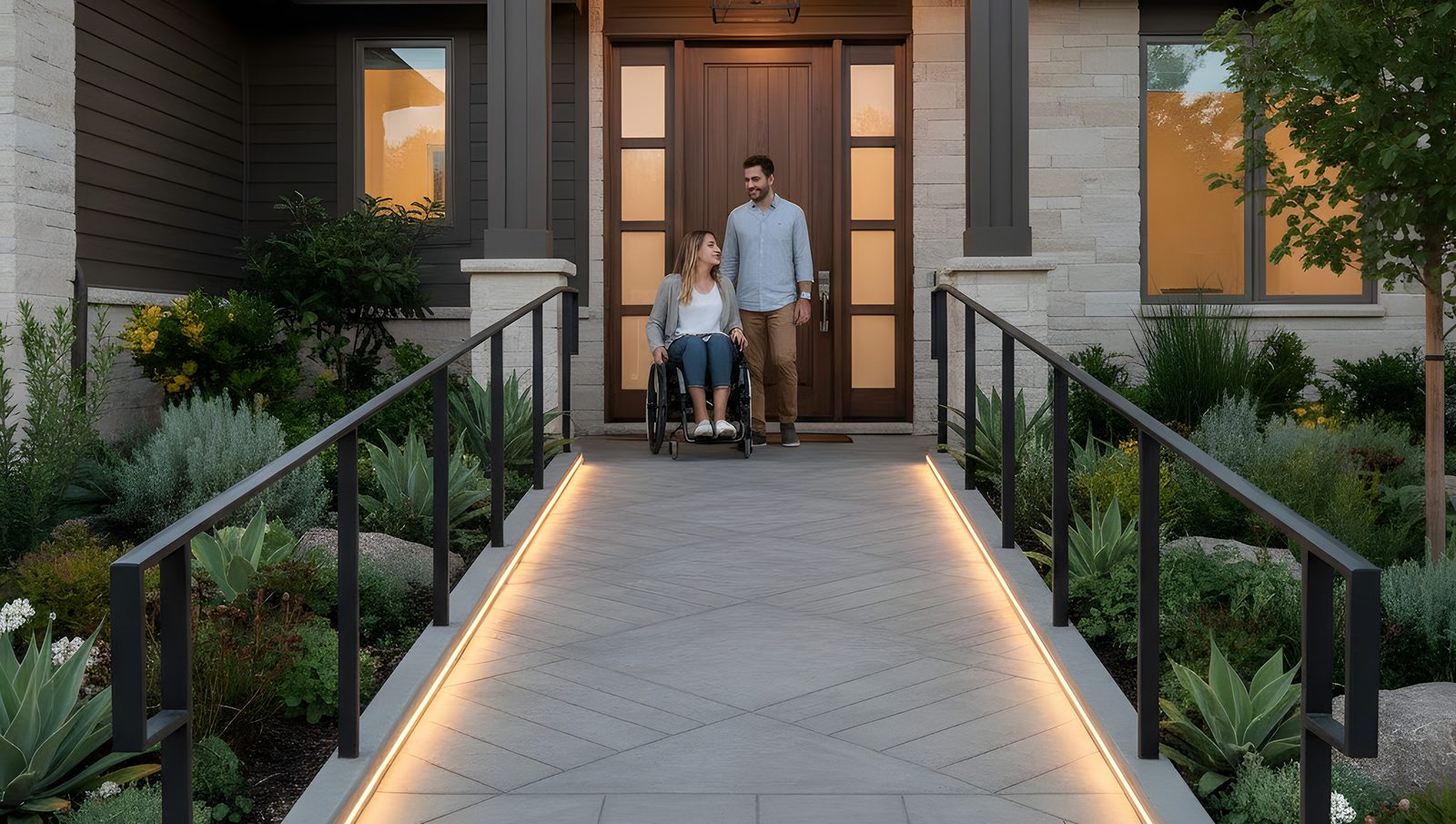
- Install a no-step entrance or a ramp for easy access
- Widen doorways and hallways to accommodate mobility aids
- Use lever-style door handles for easy gripping
- Choose non-slip flooring materials like textured tiles or low-pile carpeting
Bathrooms
- Install a curbless shower with a handheld showerhead for easy access
- Add grab bars near the toilet and shower for stability
- Use a comfort-height toilet for easier sitting and standing
- Ensure ample space for wheelchair maneuverability
- Consider a wall-mounted sink for wheelchair accessibility
Kitchens
- Install adjustable-height countertops and cabinets
- Use pull-out shelves and drawers for easy access
- Place appliances and work areas in close proximity for efficient use
- Ensure ample space for wheelchair access
- Consider a side-by-side refrigerator for easier access to both compartments
Living Areas
- Create an open floor plan for easy navigation and flexibility
- Use a variety of lighting sources, including task lighting, for better visibility
- Install rocker-style light switches for easy use
- Choose furniture with sturdy arms and high seats for easy sitting and standing
Outdoor Spaces
- Ensure a clear, well-lit path from the street to the front door
- Install handrails on both sides of stairs and ramps
- Use low-maintenance, non-slip materials for decks and patios
- Keep plantings low for better visibility and safety
Working with a Certified Aging in Place Specialist (CAPS)
To ensure that your custom home incorporates universal design principles effectively, it’s crucial to work with a custom home builder who specializes in this area. These professionals have the knowledge and expertise to guide you through the process, ensuring that your home is designed and built with accessibility, safety, and adaptability in mind.
A universal design specialist can help you:
- Identify your current and future needs
- Incorporate universal design features seamlessly into your home’s aesthetic
- Select the right materials and products for your specific requirements
- Ensure that your home meets all accessibility standards and regulations
The Future of Home Design
As our population ages and lifespan increases, the demand for homes that accommodate changing needs will only continue to grow. By incorporating universal design principles into your custom home, you’re not only investing in your own future but also contributing to a more inclusive and accessible built environment.
Universal design is not just a trend; it’s a smart and compassionate approach to home building that ensures everyone can enjoy the comfort and safety of their own home, regardless of their age or ability.
Conclusion
Building a custom home is an exciting opportunity to create a space that truly reflects your needs and desires. By incorporating universal design principles into your plans, you can ensure that your home will remain accessible, comfortable, and safe for years to come, allowing you to age in place gracefully and enjoy your space to the fullest.
Don’t wait until your needs change to start thinking about universal design. By planning ahead and working with a custom home builder who specializes in this area, you can create a home that will serve you and your loved ones for a lifetime.
Frequently asked Questions about Universal Design in your home
Universal design is a design philosophy that focuses on creating environments usable by all people, regardless of age, size, or ability. It ensures that homes are accessible, functional, and comfortable for people of all abilities, allowing homeowners to age in place comfortably and safely.
The main principles of universal design include equitable use, flexibility in use, simple and intuitive use, perceptible information, tolerance for error, low physical effort, and size and space for approach and use.
Universal design allows you to age in place, increases safety, enhances accessibility, improves adaptability, and potentially increases your home’s resale value.
You can install a no-step entrance or ramp, widen doorways and hallways, use lever-style door handles, and choose non-slip flooring materials.
Install a curbless shower, add grab bars, use a comfort-height toilet, ensure ample space for wheelchair maneuverability, and consider a wall-mounted sink.
Install adjustable-height countertops and cabinets, use pull-out shelves and drawers, place appliances and work areas in close proximity, ensure ample space for wheelchair access, and consider a side-by-side refrigerator.
Create an open floor plan, use various lighting sources, install rocker-style light switches, and choose furniture with sturdy arms and high seats.
Ensure a clear, well-lit path from the street to the front door, install handrails on stairs and ramps, use low-maintenance, non-slip materials for decks and patios, and keep plantings low for better visibility and safety.
A universal design specialist has the knowledge and expertise to guide you through the process, ensuring that your home is designed and built with accessibility, safety, and adaptability in mind.
They can help you identify your current and future needs, incorporate universal design features seamlessly into your home’s aesthetic, select the right materials and products, and ensure that your home meets all accessibility standards and regulations.
Yes, a skilled custom home builder can seamlessly integrate universal design features into your home’s design without compromising its aesthetic appeal.
No, when done properly, universal design features can be integrated seamlessly into your home’s design, maintaining a comfortable and inviting atmosphere.
Homes with universal design features appeal to a broader range of potential buyers, as they accommodate various needs and abilities, making them more attractive on the market.
It’s best to start planning for universal design early in the custom home building process, so you can ensure that your home will serve you and your loved ones for a lifetime without needing extensive modifications later on.
Planning a project in the South Sound?
Doyle Construction builds custom homes, large remodels, and ADUs across Thurston and Pierce counties. Start with a straight conversation about your land, budget, and timeline.
Start Your Project